A Sprinkler Zone Not Working in Florida Heat Is an Early Warning Sign
A single zone goes dark on a Tuesday morning in late April, and by Friday the grass in that corner of your Palm Bay yard is already showing tan streaks. A sprinkler zone not working in Brevard County doesn’t give you much of a grace period. The sun here is not the same sun that shines on a lawn in Georgia or the Carolinas, and the irrigation systems serving Cocoa, Melbourne, Titusville, and the rest of the Space Coast deal with stresses most homeowner guides never account for: ground temperatures that climb well past 100°F by mid-morning, sandy soil that corrodes wire insulation faster than almost any other soil type in the Southeast, and some of the most frequent lightning activity in the country.
This post walks through the exact reasons sprinkler zones stop working in Florida, how to tell a zone-level problem from a whole-system failure, and what you can safely check yourself before calling in a professional irrigation repair service.
Key Takeaways
- Florida’s heat, sandy soil, and coastal salt air create a combination of stressors that accelerates solenoid, valve, and wiring failures faster than in most other states.
- A single sprinkler zone not working almost always points to a valve, solenoid, or wiring fault specific to that zone, not a controller or mainline problem.
- Central Florida, including Brevard County, sees some of the highest lightning strike frequency in the country, and lightning-related damage to controllers and solenoids is not always immediately obvious.
- Most DIY checks take under 30 minutes and can confirm whether you need a part swap or a professional diagnosis.
- Under the St. Johns River Water Management District’s current watering restrictions, irrigation is limited to as little as one day a week, so a malfunctioning zone can go undetected for days and turn a small repair into a sod replacement job.
How Florida’s Heat Stresses Your Irrigation System
Most irrigation components are rated for continuous outdoor use, but that rating assumes a temperate baseline. Brevard County operates well outside that baseline from March through October. Ground surface temperatures in direct sun regularly climb well past 100°F, and the underground soil just a few inches down routinely hits temperatures that degrade rubber diaphragms, plastic valve bodies, and the insulation on low-voltage wiring.
Sandy soil makes this worse. The quick-draining soil profile common throughout the Space Coast, from Cocoa to Melbourne to Titusville, holds very little moisture buffer. That means the irrigation system runs more cycles per week than systems in heavier soils, which accelerates wear on every moving part. Sandy soil is also mildly corrosive to the uncoated copper wire used in most residential irrigation wiring, particularly where wire splices are buried without waterproof connectors.
Coastal properties in cities like Cocoa Beach and Melbourne Beach face an additional factor: salt air. Salt accelerates oxidation on metal valve components, solenoid casings, and controller terminal connections. We’ve pulled solenoids from beachside properties that looked intact from the outside but had internal corrosion severe enough to prevent the plunger from seating correctly. That kind of damage is invisible until you test the component directly.
Top Reasons a Sprinkler Zone Stops Working
Failed or Burned-Out Solenoid
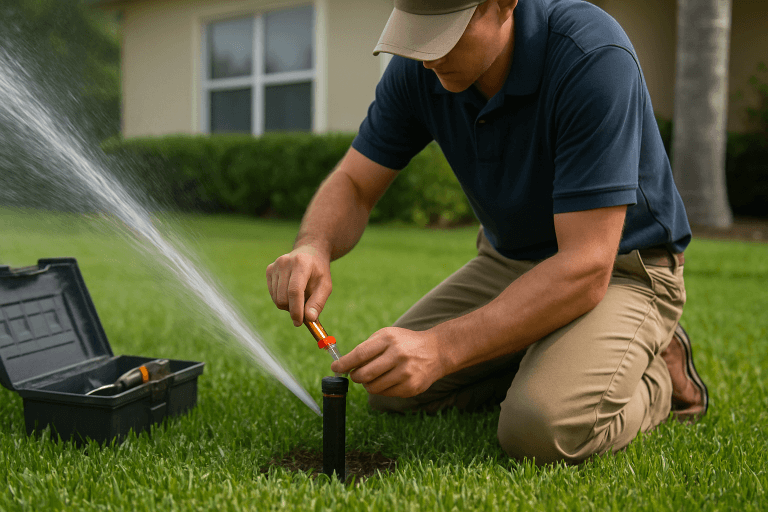
The solenoid is the electromagnetic coil that opens a zone valve when the controller sends a signal. In Florida’s heat, solenoids work harder because the voltage required to lift a heat-swollen valve diaphragm is slightly higher than in cooler conditions. Over time, repeated thermal cycling cracks the coil winding or degrades the internal seal. A failed solenoid is the single most common cause of a sprinkler zone not working that we diagnose at Prolawn, and it’s one of the most straightforward repairs when caught early.
Testing is simple with a multimeter: a healthy solenoid reads between 20 and 60 ohms of resistance depending on the manufacturer. A reading of zero or infinite resistance means the coil has failed.
Valve Diaphragm Damage
Inside every zone valve is a rubber diaphragm that controls water flow. Florida’s UV exposure and heat degrade this diaphragm faster than the manufacturer’s published lifespan suggests. A cracked or warped diaphragm causes one of two symptoms: the zone won’t open at all, or it weeps water constantly even when the controller is off. Both failures waste water and can create compliance issues during restricted watering hours.
Wiring Faults and Corrosion
Every zone has a dedicated wire running from the controller to its valve. In Brevard County’s sandy, slightly acidic soil, wire insulation degrades at splice points, particularly at connections made without gel-filled waterproof caps. A corroded or broken wire produces an open circuit, and the controller reads it as a zone fault. Lightning is the most dramatic version of this problem. Central Florida sees some of the highest lightning strike frequency in the country, according to the National Weather Service’s Melbourne office, which covers Brevard County directly. A nearby strike can induce a voltage spike that burns wire insulation at multiple points simultaneously, sometimes several feet from the splice, making the break extremely hard to locate without a wire fault locator tool.
Clogged or Damaged Sprinkler Heads
A zone that appears dead might actually have water reaching the valve but failing to distribute properly due to blocked or broken heads. Florida’s sandy soil works into head internals during dry spells when heads retract below grade. Mower strikes are also common, particularly on St. Augustine lawns where heads sit slightly proud of the turf surface. A single broken head that’s spraying sideways underground can drop zone pressure enough that no other head in the zone pops up at all.
Controller Programming Errors and Lightning Damage
A controller that lost its programming after a power surge will sometimes display a zone as active while sending no actual signal to the valve. After any significant storm, check your controller display first: confirm each zone’s run time and start time are still programmed correctly. Plenty of Brevard County homeowners have assumed a zone was broken when the controller had simply reset to factory defaults after a lightning-heavy storm season.
Low System Pressure
Municipal water pressure in parts of Brevard County, particularly in older Titusville and Cocoa neighborhoods, fluctuates more than residents realize. If pressure drops below roughly 30 PSI at the point of connection, zones at the end of a lateral line will underperform or appear completely inactive while zones near the main line work normally. A pressure gauge at the backflow preventer will tell you in 60 seconds whether this is the culprit.
Zone-Specific vs. Whole-System Failures: How to Tell the Difference
A zone-specific failure means exactly one zone is dead while every other zone operates normally. This pattern almost always points to something between the controller terminal for that zone and the last head on that zone’s lateral: the wire, the solenoid, the valve body, or the heads themselves. The controller is almost certainly fine.
A whole-system failure, where no zones respond, points upstream: the controller power supply, the master valve (if your system has one), the backflow preventer, or the main shutoff. Before assuming the worst, check that the controller is powered (display lit), the main shutoff is open, and the backflow preventer hasn’t been manually closed. These simple checks account for a surprising percentage of the “whole system is dead” calls we get, and they take under a minute to rule out.
What You Can Safely Check Yourself in Under 30 Minutes
Before calling in a professional, a handful of checks can tell you a lot about whether a sprinkler zone not working is a quick fix or something that needs a technician:
- Confirm the controller display is lit and each zone’s programmed run time hasn’t reset to factory defaults, especially after a storm.
- Test the suspect zone’s solenoid with a multimeter for a reading between 20 and 60 ohms; zero or infinite resistance means it has failed.
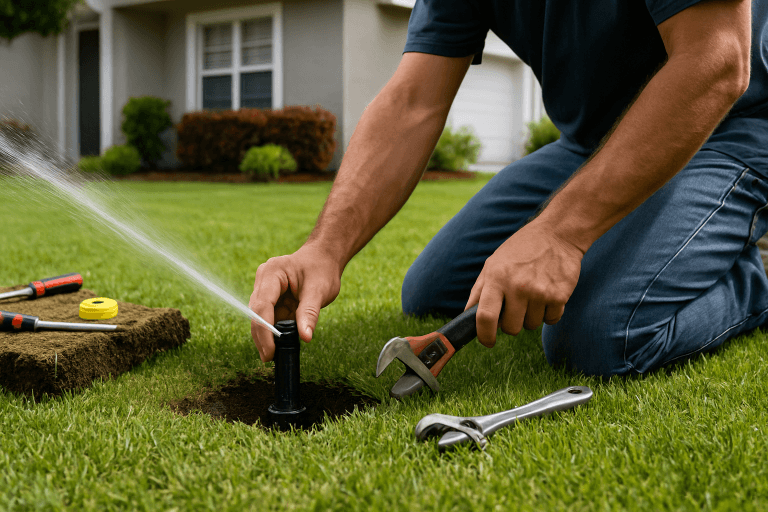
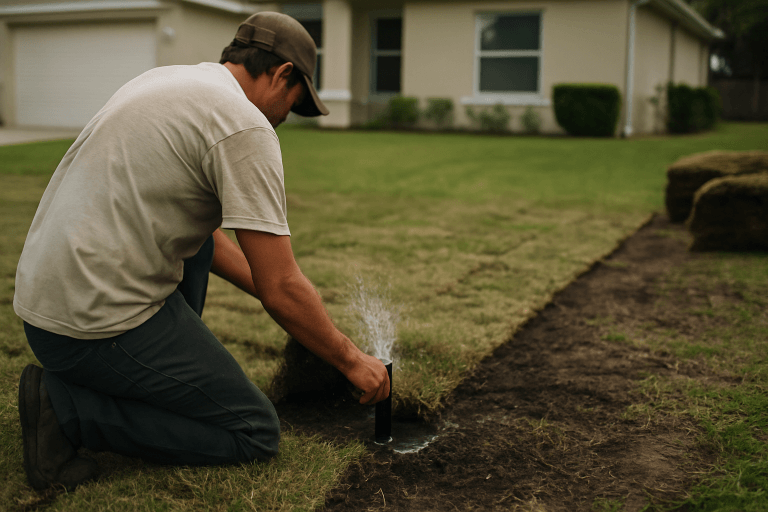
- Walk the zone while it runs, if it will run at all, and look for heads that are missing, cracked, or spraying sideways underground.
- Check the backflow preventer and main shutoff are fully open, especially if every zone is unresponsive rather than just one.
- Check water pressure at the backflow preventer with a simple gauge if zones at the far end of a line are underperforming.
If those checks point to a bad solenoid, a cracked head, or a simple wiring fix you’re comfortable making, it’s a reasonable DIY repair. If the wire fault isn’t visible, the valve itself needs replacing, or you’re dealing with a whole-system failure, that’s usually the point where a sprinkler system repair technician can save you the guesswork and the wasted water.
When It’s Time to Call a Professional
Some symptoms are worth skipping the DIY steps entirely. A wire fault that spans multiple points after a lightning strike needs a fault locator tool most homeowners don’t own. A valve that’s weeping constantly, even with the controller off, usually means the diaphragm needs replacing before it wastes more water than the repair would ever cost. And a whole-system failure that isn’t explained by a closed shutoff or a dead controller display often points to a problem at the backflow preventer or main line that’s worth having diagnosed properly the first time.
Prolawn’s irrigation system repair team works on exactly these issues across Cocoa, Melbourne, Titusville, Rockledge, and the rest of Brevard County, and we’ve seen firsthand how much worse a small zone problem gets when it sits undetected during a restricted watering week.
The Bottom Line
A sprinkler zone not working in Florida heat is rarely a mystery once you know where to look. Most of the time it’s a solenoid, a valve diaphragm, a wire, or a head, not the controller itself, and a 30-minute check can usually tell you which. The part that catches people off guard isn’t the failure, it’s how long it can go unnoticed under current watering restrictions, and how quickly a small repair turns into a sod replacement bill.
Not sure which one you’re dealing with? Request a free quote or call Prolawn at 321-233-9890 and we’ll get a technician out to diagnose it properly.
Frequently Asked Questions
Why is only one sprinkler zone not working while the others are fine?
That pattern almost always points to something specific to that zone, the solenoid, the valve diaphragm, the wire running to it, or the heads themselves, rather than the controller. A whole-system failure looks different: no zones respond at all.
Can lightning really damage a sprinkler system that wasn’t struck directly?
Yes. A nearby strike can induce a voltage spike that travels through buried wiring and damages solenoids, controllers, or wire insulation at multiple points, sometimes far from where the strike actually hit. Central Florida sees some of the highest lightning frequency in the country, which makes this a regular cause of zone failures here.
How do I test a sprinkler solenoid myself?
Use a multimeter to check resistance across the solenoid. A healthy reading is typically between 20 and 60 ohms depending on the manufacturer. A reading of zero or infinite resistance means the coil has failed and the solenoid needs replacing.
Why does a broken zone matter more right now under watering restrictions?
Under current watering restrictions in Brevard County, most properties only irrigate one or two days a week. A broken zone can go unnoticed for a full watering cycle or longer, which is often enough time for grass to brown out and require sod replacement rather than a simple repair.