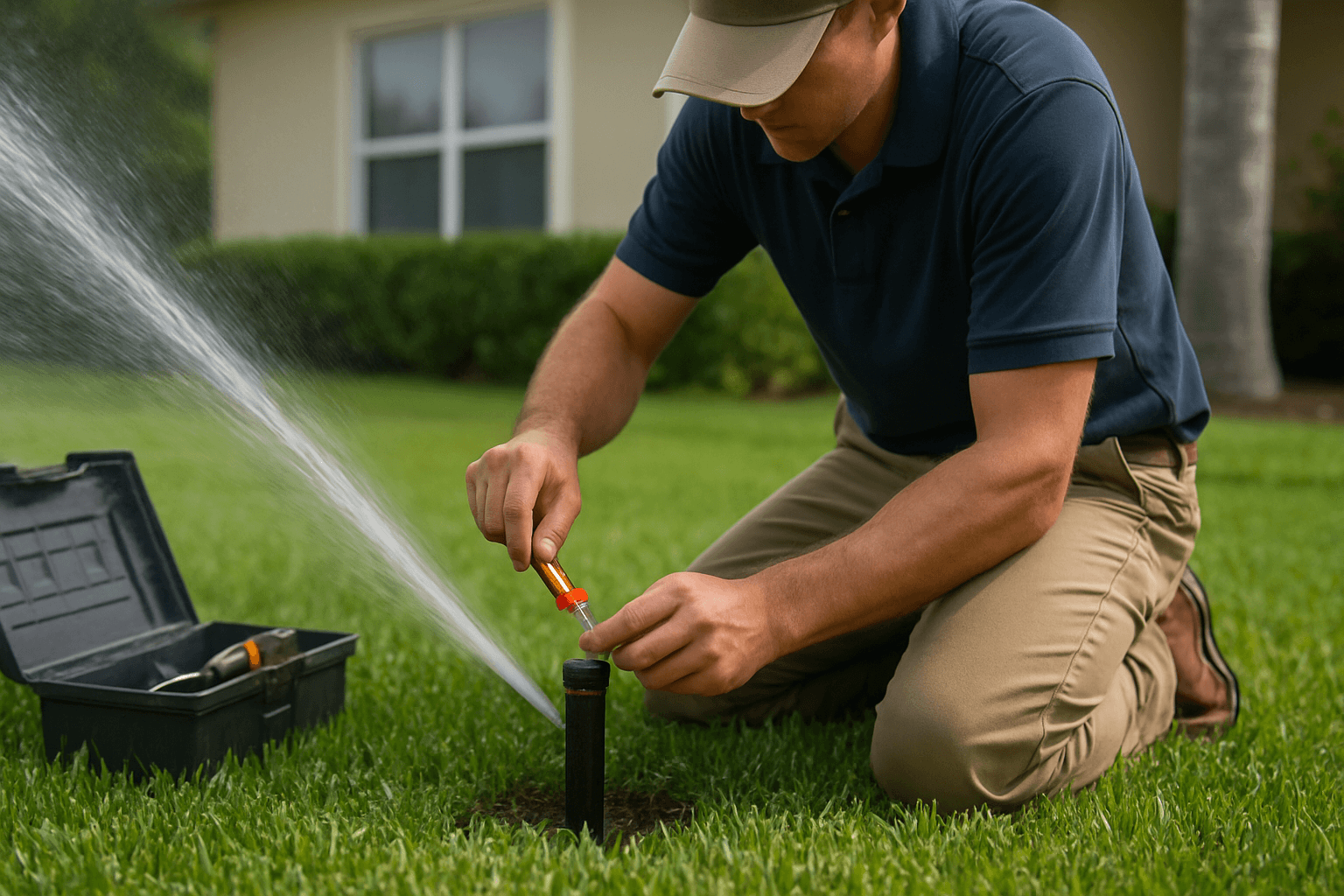
Sprinkler System Inspection Satellite Beach FL: What a Tech Checks Before Dry Season
A Satellite Beach homeowner called us in late October after watching his St. Augustine lawn turn the color of straw in under three weeks. His controller had been running on a summer schedule, two of his six zones had clogged heads from salt-laden sand, and his backflow preventer had corroded to the point where it was no longer code-compliant. One pre-dry-season sprinkler system inspection in Satellite Beach, FL would have caught all three problems for a fraction of what he paid to repair the damage and resod a 400-square-foot patch.
That scenario repeats itself every November across Brevard County’s barrier island communities. This post walks you through exactly what a licensed Prolawn irrigation technician checks during a pre-dry-season inspection, why Satellite Beach’s coastal environment makes that checklist different from an inland Florida property, and how to get yours scheduled before the dry months arrive.
When Does Satellite Beach’s Dry Season Hit – and Why Timing Your Inspection Matters
Florida’s dry season runs roughly from November through May, but Satellite Beach and the surrounding Brevard County barrier island communities feel the shift earlier than inland areas. The St. Johns River Water Management District, which governs irrigation rules for most of Brevard County, tracks rainfall data showing that October average precipitation drops significantly compared to the June-through-September wet season peak. By the time you notice brown patches in mid-November, your soil moisture deficit is already two to three weeks old.
The practical window for a pre-dry-season inspection is September through mid-October. That timing matters for two reasons. First, any repairs identified during the inspection can be completed before water demand spikes. Second, the St. Johns River Water Management District’s year-round irrigation restrictions limit most residential properties to watering twice per week, which means your system has to work correctly every single cycle – there’s no room for inefficiency when you’re already restricted.
Scheduling in September also gives a licensed contractor time to source replacement parts. Specific head models rated for salt-spray environments, brass valve bodies, and corrosion-resistant backflow preventers are not always in stock at local suppliers, and lead times can run one to two weeks during peak season.
The Real Risks of Skipping a Pre-Dry Season Sprinkler Inspection
Skipping an annual inspection doesn’t just risk a brown lawn. The financial exposure is wider than most homeowners expect.
- Wasted water and higher bills: A single broken head spraying at the wrong angle can waste 10 to 15 gallons per minute per zone cycle. Over a two-month dry season with twice-weekly watering, that adds up to thousands of wasted gallons – and a utility bill that doesn’t match any visible improvement in your lawn.
- St. Johns River Water Management District fines: Visible irrigation runoff onto sidewalks, roads, or neighboring properties violates Florida’s water management rules. A head that’s shifted to spray concrete instead of turf is an easy citation target during the water district’s compliance periods.
- Sod loss and replacement costs: Dry-season turf stress from inadequate coverage is often irreversible by spring. Resodding a damaged area in Satellite Beach typically costs $0.65 to $1.20 per square foot installed, not counting the irrigation repair that should have happened first.
- Accelerated corrosion damage left unchecked: Salt air corrosion on valve solenoids and controller wiring doesn’t stop between seasons. A minor $30 solenoid replacement left until spring often becomes a $200 valve assembly replacement by the time the corrosion migrates to the manifold.
Our sprinkler system repair calls spike every December from homeowners who skipped September inspections. That pattern has held for over 25 years of serving Brevard County.
What a Certified Irrigation Technician Checks During an Inspection
Here is the actual step-by-step process a Prolawn technician follows during a pre-dry-season irrigation inspection in Satellite Beach. This is not a generic checklist pulled from a manufacturer’s manual – it reflects what we’ve learned from inspecting hundreds of coastal Brevard systems since the late 1990s.
Step 1: Controller Audit and Schedule Review
The technician starts at the controller before turning on a single zone. They confirm the current watering schedule matches the St. Johns River Water Management District’s allowable days for your address, check that the seasonal adjust or water budget setting hasn’t been left at a wet-season percentage, verify the rain sensor is functional and communicating with the controller, and confirm the correct time and date are programmed (a dead battery can reset the clock and eliminate the rain sensor override).
Step 2: Zone-by-Zone Activation and Pressure Check
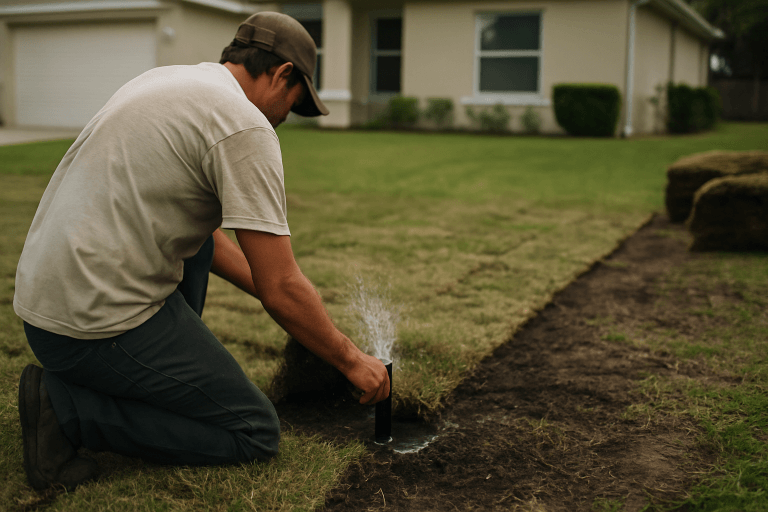
Each zone is activated manually, one at a time. The technician walks the full coverage arc while the zone runs, using a simple tube-style pressure gauge at a test port or head to confirm operating pressure falls within the manufacturer’s rated range, typically 30 to 45 PSI for most pop-up rotor heads. Low pressure points to a valve problem, a partially closed isolation valve, or a mainline leak. High pressure causes misting, which wastes water and promotes fungal disease in the turf canopy.
Step 3: Head-by-Head Inspection
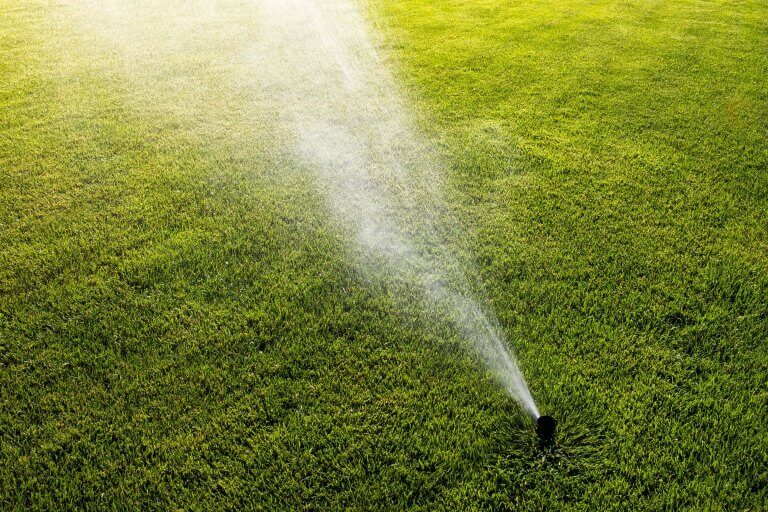
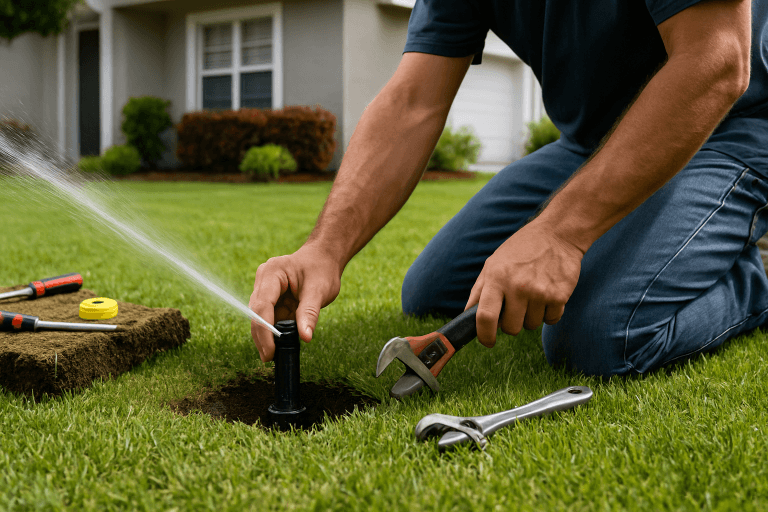
Every head in every zone is checked for: pop-up height (heads sunken below grade don’t clear turf growth and spray incorrectly), arc and radius adjustment, clogged or worn nozzles, tilted or misaligned bodies, and head type compatibility within the zone. Mixing rotors and fixed spray heads on the same zone is one of the most common mistakes we see on older Satellite Beach systems – they have completely different precipitation rates and cannot be scheduled together without over- or under-watering one part of the zone.
Step 4: Backflow Preventer Inspection
Florida law requires a backflow preventer on all irrigation systems connected to a potable water supply. In coastal environments, the brass body and test cocks on a pressure vacuum breaker or reduced-pressure zone assembly corrode faster than in inland areas. The technician checks for visible corrosion, tests the relief valve function, and confirms the assembly is mounted at the correct height above the highest head in the system. A failed backflow preventer isn’t just a code violation – it’s a direct contamination risk to your drinking water supply.
Step 5: Mainline and Lateral Leak Detection
With all zones shut off and the master valve closed, the technician checks the meter for movement. Any measurable flow at the meter with all zones off indicates a mainline leak, which in Satellite Beach’s sandy soil can migrate laterally for 20 or more feet before surfacing. Lateral line leaks within zones are identified during the zone-by-zone run by watching for soft, saturated areas or pressure drops inconsistent with the head count on that zone.
Step 6: Valve Box and Wiring Check
Valve boxes in coastal yards fill with sand, debris, and moisture faster than anywhere else in Brevard County. The technician clears each box, inspects the solenoid wires for corrosion at the wire nut connections (the single most common electrical failure point), checks valve diaphragms for cracking or debris, and confirms the flow control stem is set correctly. A stuck-open valve is one of the top reasons water bills spike without any visible surface coverage change.
Coastal Considerations: How Salt Air and Sandy Soil Affect Satellite Beach Irrigation Systems
This is where a Satellite Beach inspection genuinely differs from what you’d find on a property in Viera or Palm Bay. The difference is not subtle.
Salt air corrosion attacks brass fittings, solenoid casings, and exposed wiring year-round. We’ve pulled solenoids from Satellite Beach systems that were two years old and looked like they’d been in saltwater for ten. Stainless steel clamps, marine-grade wire connectors, and UV-stabilized valve boxes aren’t optional here – they’re the correct specification for this environment.
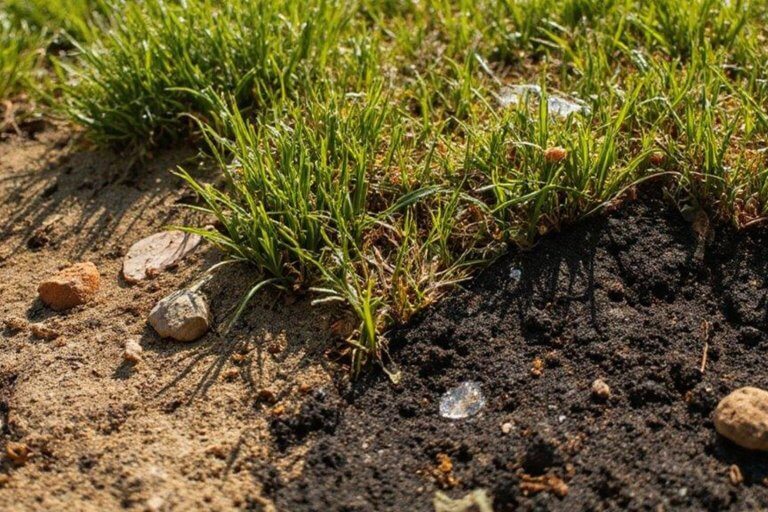
Sandy soil drainage changes how irrigation coverage translates to root-zone moisture. Satellite Beach’s excessively drained sandy soils, classified by the USDA Web Soil Survey as Canaveral fine sands and similar coastal series, drain so quickly that a standard precipitation rate for inland clay-influenced soils will leave the turf root zone dry within hours of watering. A technician familiar with coastal Brevard soils will flag zones where head spacing or nozzle selection is creating the illusion of adequate coverage while the soil dries out faster than the schedule assumes.
Salt spray on turf also interacts with irrigation. Poorly distributed water that leaves dry pockets during salt-spray events concentrates sodium in those areas, burning turf before the homeowner realizes the coverage map has a gap. The Florida-Friendly Landscaping program, administered through the University of Florida IFAS Extension, recommends frequent system audits for any coastal property within one mile of the ocean – which covers virtually all of Satellite Beach.
If your current system is due for an upgrade or you’re adding zones to cover new planting beds, our irrigation repair and installation services are designed specifically for Brevard County’s coastal conditions. You can also see real examples of irrigation work paired with sod installation in our project showcase.
For homeowners managing the broader picture of their lawn heading into dry season, our Satellite Beach lawn care services cover everything from turf health assessments to fertilization timing that works alongside your irrigation schedule rather than against it.
How to Schedule a Sprinkler Inspection in Satellite Beach FL and What to Expect
Scheduling with Prolawn is straightforward. Here’s what the process looks like from your first call to the completed inspection report.
- Call or submit a quote request. Reach us at +1 321-427-0676 or through the online quote form. Have your controller brand and model handy if possible – it helps the technician arrive with any brand-specific tools or test adapters.
- Scheduling window. We typically schedule Satellite Beach inspections within five to ten business days during September and October. If you’re reading this in November, book immediately – appointment availability tightens once dry season symptoms start showing up on lawns across the barrier island.
- Day of the inspection. Plan for 60 to 90 minutes on-site for a standard residential system with six to ten zones. Larger commercial properties or systems with more than 12 zones take longer. You don’t need to be present for the entire inspection, but being available at the start and end allows the technician to walk you through findings in person.
- Written findings report. Every inspection ends with a written summary of findings: what’s working, what needs repair, and what is approaching end of life. We price repairs separately from the inspection so you can make an informed decision with no pressure.
- Repair scheduling. If repairs are needed, most standard fixes – head replacements, solenoid swaps, minor lateral line repairs – can be completed on a return visit within the same week. Parts that require ordering are noted with estimated lead times so you can plan accordingly before dry season peaks.
Prolawn Turf and Landscape has been serving Brevard County for over 25 years, licensed and insured, with a team that knows the difference between a generic irrigation checklist and one designed for the specific conditions your Satellite Beach property faces every single dry season.
Schedule Your Inspection Before Dry Season Hits
The single most important takeaway here: a sprinkler system inspection is not maintenance for maintenance’s sake – it’s the difference between a lawn that holds through a six-month dry season and one that needs resodding in April. Satellite Beach’s coastal environment makes the stakes higher than most homeowners realize until after the damage is done.
Schedule your sprinkler system inspection in Satellite Beach today. Call Prolawn at +1 321-427-0676 or request a free quote online. September and October slots fill up – don’t wait until you can see the problem from the street.
Frequently Asked Questions
How often should I have my sprinkler system inspected in Satellite Beach FL?
Once per year is the minimum for Satellite Beach properties, and the pre-dry-season window (September to October) is the highest-value timing. Coastal salt air corrosion and sandy soil conditions accelerate wear on heads, valves, and wiring faster than inland Florida systems, so annual inspections catch problems before they compound. Properties with older systems or a history of high water bills benefit from a mid-season check as well.
What time of year is best to schedule a sprinkler inspection in Brevard County?
September through mid-October gives you the best outcome. Florida’s dry season starts in November, and scheduling six to eight weeks before peak demand means any identified repairs can be completed before your system is working at full load. Inspections done in December or January are still worthwhile, but you’re already into the dry season and any turf damage from underperforming zones may already be underway.
How long does a professional sprinkler system inspection take?
A standard residential system with six to ten zones takes 60 to 90 minutes for a thorough inspection covering the controller, all heads, valves, backflow preventer, and mainline leak check. Larger systems with 12 or more zones, or properties with multiple controllers, typically run two to three hours. The written findings report is completed on-site before the technician leaves.
Can salt air from the Atlantic really damage my irrigation system?
Yes, and faster than most homeowners expect. Salt air accelerates oxidation on brass fittings, corrodes solenoid casings, and degrades wire insulation and connections inside valve boxes. Satellite Beach properties within a half mile of the ocean can see corrosion-related failures in components that would last 10 or more years on an inland Brevard property. Specifying marine-grade connectors and stainless hardware at installation helps, but annual inspection is still the only reliable way to catch corrosion before it causes system failures.
Will a sprinkler inspection find leaks that are driving up my water bill?
In most cases, yes. A trained technician checks the water meter for movement with all zones shut off to confirm or rule out a mainline leak, and walks each zone while it runs to identify pressure anomalies that point to lateral line leaks or stuck-open valves. In our experience across Brevard County, an unexplained spike in water bills is caused by an irrigation system issue roughly 70 percent of the time – usually a valve that won’t close fully or a lateral line leak in sandy soil that isn’t surfacing visibly.