How to Choose Sod Types Palm Bay (A Homeowner’s Guide)
Most sod failures in Palm Bay happen before the first pallet is ever unloaded. The wrong grass variety goes down, struggles through its first dry season, and the homeowner ends up right back where they started. After 25 years of sod installation in Palm Bay and across Brevard County, the pattern is consistent: variety selection is where the project either wins or loses.
This guide covers the best sod types Palm Bay conditions actually call for, grounded in the specific soil, sun, and water conditions that define this part of Florida. No generic advice lifted from a national turf database. Just what actually performs here.
Key Takeaways
- Palm Bay’s sandy flatwoods soil drains fast, which means drought tolerance and root depth matter more here than in heavier clay markets.
- St. Augustine (Floratam) is the most installed variety in Palm Bay for a reason, but it’s not always the right fit for every yard.
- Zoysia offers genuine drought resilience and wear resistance but requires more patience during establishment than most homeowners expect.
- Bahia is the lowest cost, lowest maintenance option and performs well in full sun, but it won’t give you a golf course look.
- Irrigation compatibility matters as much as the grass itself. Sod installed without a properly calibrated sprinkler system rarely establishes well in Brevard County’s dry season.
Understanding Palm Bay’s Unique Soil and Climate Challenges
Palm Bay sits on a bed of sandy flatwoods soil that drains water quickly. Too quickly, in many yards. According to University of Florida IFAS Extension, Spodosol and Entisol soil types, both common throughout Brevard County, are sandy, low in organic matter, and prone to leaching nutrients and moisture out of the root zone rather than holding onto them. That has direct consequences for sod selection.
When water drains through the root zone in hours rather than days, grasses that depend on consistent moisture struggle badly during dry season. Palm Bay averages around 53 inches of rainfall annually, but that total is deceptive. Most of it falls between June and September. The January through May stretch can be brutally dry, and the St. Johns River Water Management District, which governs all of Brevard County, enforces irrigation restrictions that currently limit landscape watering to one day per week under an active water shortage order, with normal year rules allowing one to two days per week depending on your address and the time of year.
UV intensity is another factor that out of state guides underestimate. Palm Bay sits at roughly 28 degrees north latitude, and combined with Florida’s humidity and reflective sandy soils, turf stress from heat and UV is measurably worse here than in, say, Georgia or the Carolinas. Grasses that are marketed as full sun varieties in other states may still show heat stress symptoms in a Palm Bay August. Choosing the right sod types Palm Bay conditions call for starts with respecting that stress, not fighting it after the fact.
For properties near the Indian River Lagoon, light salt air exposure adds one more variable. It’s not the same as beachfront conditions, but salt tolerant varieties perform noticeably better on those western Palm Bay lots than salt sensitive ones do.
Sod Types Palm Bay Yards Thrive With
St. Augustine (Floratam)
St. Augustine grass, specifically the Floratam cultivar, covers more Palm Bay lawns than any other variety. That’s not coincidence. Floratam handles Florida’s intense heat, establishes relatively quickly, and produces the dense, lush look most homeowners want. It’s also widely available from local sod farms, which keeps cost per pallet competitive. Among the sod types Palm Bay homeowners ask us about most, Floratam is still the default starting point for a reason.
The honest downside: Floratam has no real drought tolerance. In Palm Bay’s sandy soil, without a properly functioning irrigation system, it shows stress within a week of missed watering during dry season. Chinch bug pressure is also high in Brevard County, and Floratam is susceptible. Plan for a pest management program if you go this route.
Shade tolerance is moderate. If your yard has large live oaks or structures blocking sun for more than four to five hours a day, a shade tolerant St. Augustine cultivar like Seville or Palmetto will outperform Floratam. It’s one of the most requested sod types Palm Bay customers ask about by name, largely because it’s what most neighbors already have.
Zoysia
Zoysia has earned a strong following in Palm Bay over the past decade, and the interest is justified, though it’s worth setting the numbers straight. University of Florida IFAS Extension classifies Zoysia’s water use as moderate, on par with St. Augustine, not dramatically lower as some marketing claims suggest. What actually distinguishes Zoysia is how it handles drought: it responds by going dormant and turning brown fairly quickly when water is scarce, then regains its green color once irrigation or rainfall resumes. That’s a genuinely useful trait in a county where irrigation restrictions are a year round reality, even if it isn’t the same thing as using dramatically less water.
The trade off is establishment time. Zoysia roots slowly, and new installs can look unimpressive for several months before the lawn fills in. Homeowners who expect the same quick establishment as St. Augustine are often disappointed at the 60 day mark. By month six, though, a well installed Zoysia lawn in Palm Bay typically outperforms St. Augustine in wear resistance and overall density.
Zoysia also handles moderate shade reasonably well, though it’s not a deep shade solution. Its salt tolerance is better than St. Augustine’s, making it a solid pick for western Palm Bay lots near the Indian River.
Bahia
Bahia is the practical choice for homeowners who prioritize low maintenance and low cost over a manicured appearance. It handles full sun and drought far better than St. Augustine, thrives in sandy soil with minimal inputs, and resists most of the insect pressure that plagues other varieties in Brevard County.
It produces a coarser texture and a less uniform look than St. Augustine or Zoysia. Seed heads appear frequently during summer and require regular mowing to manage. If your goal is a thick, carpet like lawn, Bahia won’t deliver that. But for large lots, utility areas, or homeowners who want a low water, low chemical lawn, it’s genuinely one of the better sod types Palm Bay’s sandiest, sunniest lots can support.
Bermuda
Bermuda grass thrives in full sun and handles foot traffic better than any other variety listed here. It’s the sod of choice for sports fields and commercial properties in Brevard County. For residential Palm Bay lawns, though, it comes with a significant catch: Bermuda goes dormant and turns brown during cool Florida winters, which runs roughly from December through February. That cosmetic issue eliminates it for most homeowners who want a year round green lawn.
Bermuda also spreads aggressively and can invade flower beds and hardscaped borders quickly. It requires more frequent mowing during peak growing season. For the right property and the right homeowner, it’s excellent. Among the sod types Palm Bay residential yards typically call for, though, it’s usually not the top pick because of the winter dormancy issue.
Comparing Sun Tolerance, Shade, and Water Needs by Grass Type
Here’s a direct comparison of how each of these sod types Palm Bay lawns commonly use performs against the area’s most common yard conditions:
- Full sun performance: Bermuda ranks highest, followed by Bahia, Zoysia, and then St. Augustine (Floratam).
- Shade tolerance: Shade tolerant St. Augustine cultivars (Seville, Palmetto) lead, followed by Zoysia, then Bahia (minimal shade tolerance), then Bermuda (needs full sun to survive).
- Drought response: Bahia handles drought with the least fuss, Zoysia survives it by going dormant and recovering well, Bermuda is close behind, and St. Augustine is the most water dependent of the four.
- Establishment speed: St. Augustine roots fastest (4 to 6 weeks in warm conditions), Bermuda and Bahia follow, and Zoysia takes the longest at 3 to 6 months for full establishment.
- Salt air tolerance: Zoysia and Bahia handle light coastal exposure well. St. Augustine is moderate. Bermuda is the least tolerant of the group.
- Maintenance level: Bahia is lowest maintenance overall. St. Augustine and Bermuda require more frequent mowing, fertilization, and pest attention. Zoysia sits in the middle once established.
For most Palm Bay homeowners with average sun exposure and a functioning irrigation system, the real choice comes down to St. Augustine versus Zoysia. St. Augustine gives you a faster, lusher result. Zoysia gives you better long term durability and a grass that survives dry stretches by going dormant rather than dying outright, at the cost of a slower start.
What to Know Before Installing Sod in Brevard County
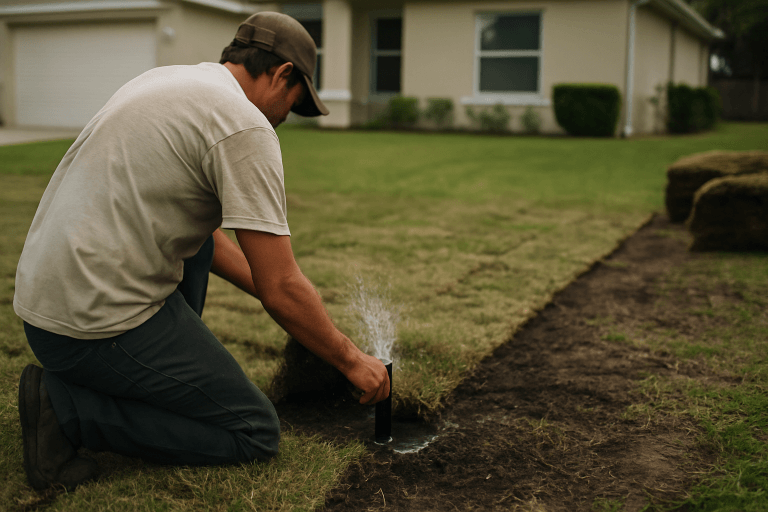
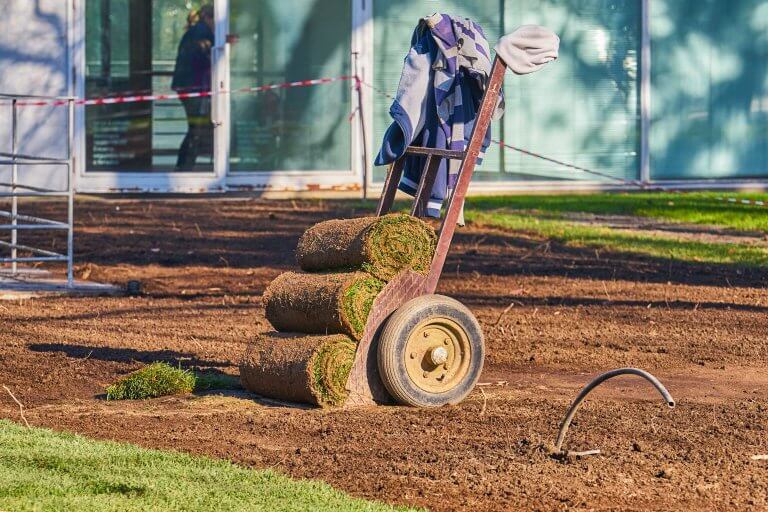
Soil preparation is the step most homeowners underestimate. In Palm Bay’s sandy flatwoods soil, laying sod directly on compacted or nutrient depleted ground produces predictable failure. Proper site prep includes grading for drainage (standing water after rain is a death sentence for new sod), tilling the top few inches of existing soil to reduce compaction, and applying a starter fertilizer before the sod goes down.
Irrigation is not optional during establishment. Regardless of which of the sod types Palm Bay yards commonly use you choose, new sod needs consistent moisture for at least the first three to four weeks. The good news is that the St. Johns River Water Management District already builds an allowance for this into its rules: new sod and plant material can be watered daily for the first 15 days after installation, then up to three days per week for the next 15 days, before reverting to the standard restricted schedule. This is a step that homeowners frequently don’t know about, and knowing it can make a real difference in first month survival rates.
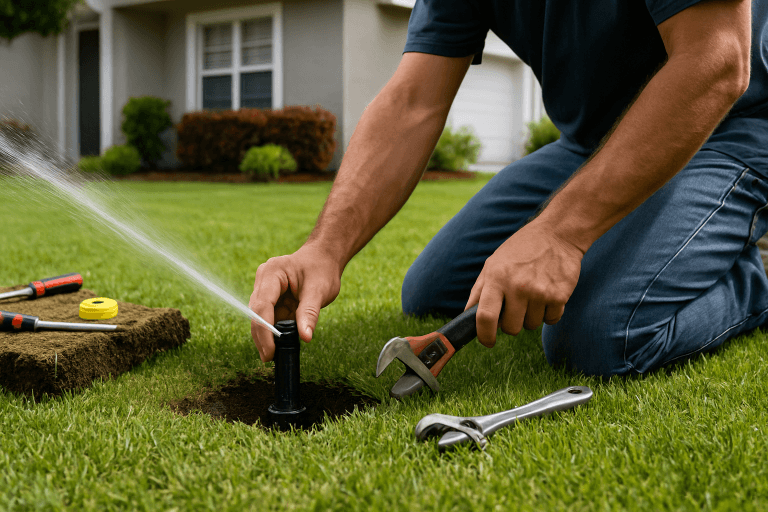
Pairing your sod install with a properly designed sprinkler system isn’t upselling. It’s practical. We’ve seen more than a few homeowners invest $2,000 to $4,000 in sod installation only to watch it fail during a dry April because their irrigation coverage had dead zones. A coverage audit before the sod goes down costs a fraction of a re-install.
If you want to see how professional sod and irrigation projects come together in Brevard County, the sod and irrigation installation gallery on our site walks through real projects with before and after results.
Why Professional Sod Installation Makes a Difference in Florida
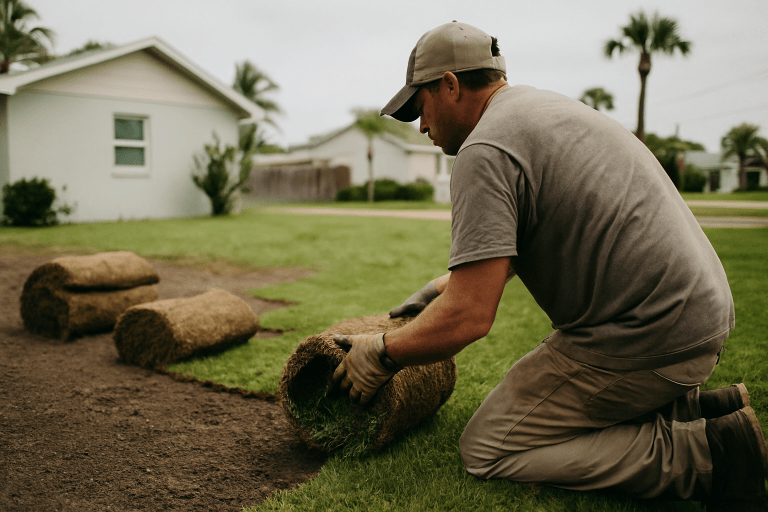
DIY sod installation in Palm Bay is possible. It’s also a lot of physical work in serious heat, and the margin for error is smaller than most homeowners expect. Seams that don’t align properly, sod laid on unlevel ground, or pallets that sit on a driveway too long in July heat can all cause an install to underperform regardless of which variety you chose.
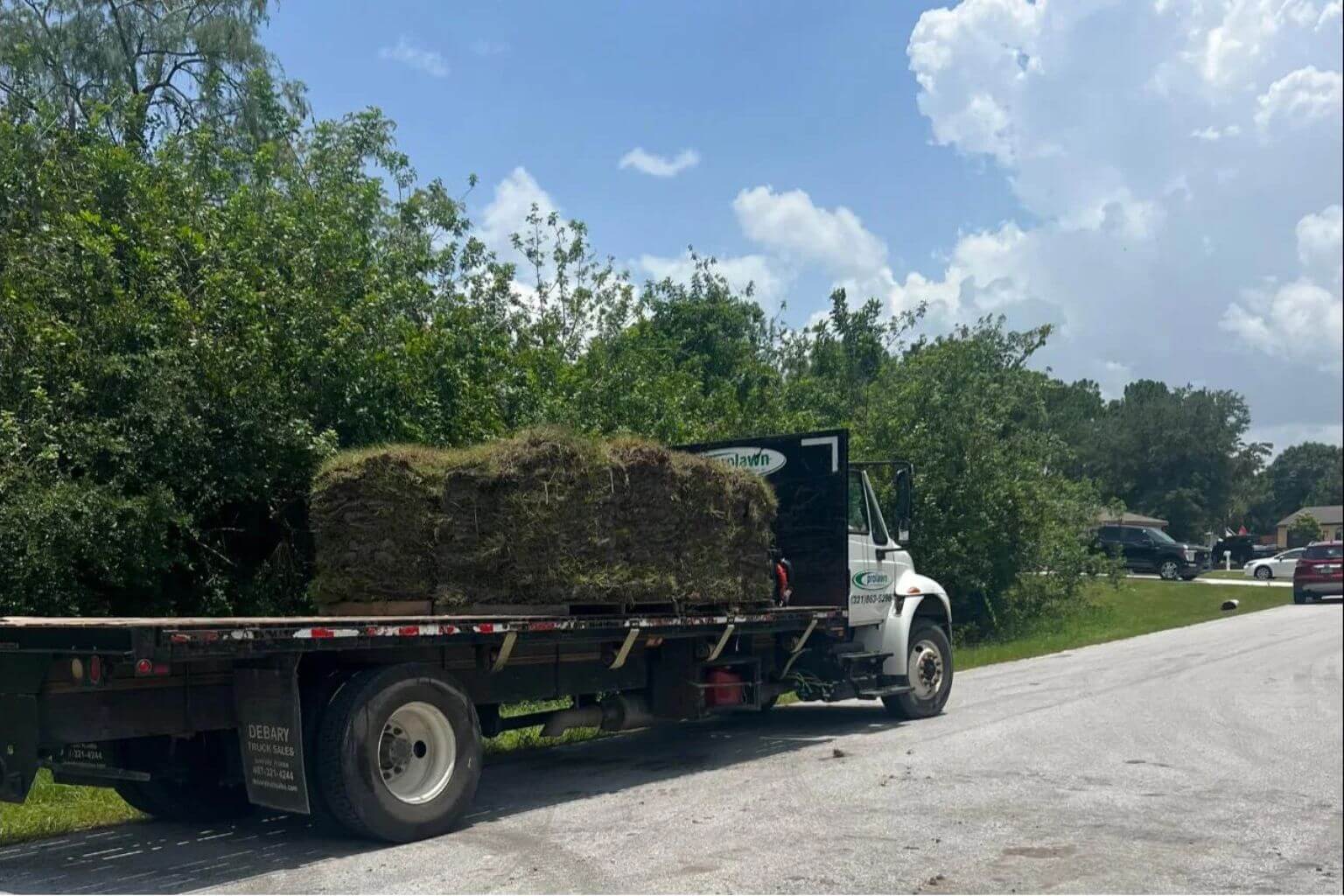
Licensed contractors bring calibrated equipment for soil prep and grading, experience reading drainage patterns specific to Palm Bay’s flatwoods terrain, and access to sod sourced from farms that supply fresh cut product. Freshness matters. Sod that has been palletized for more than 24 hours in Florida summer heat begins to degrade. Knowing where your sod comes from and how quickly it goes from farm to yard is part of what a professional contractor manages.
Prolawn Turf and Landscape has handled sod installations across Brevard County for over 25 years. We’re licensed and insured, and we handle the full scope of what a Palm Bay lawn project actually requires: sod installation, site preparation, irrigation assessment, and the kind of follow up that protects your investment through the first critical season. Our work in the county covers everything from small residential yards in Palm Bay to large commercial properties in Rockledge and beyond. You can review past project results in our project gallery.
Your Next Step
The right sod for your Palm Bay yard depends on your sun exposure, your irrigation setup, how much maintenance you’re willing to do, and what you want the lawn to look like year round. There’s no single correct answer among the sod types Palm Bay homeowners choose from, but there is a best answer for your specific property.
Request a free quote for sod installation in Palm Bay. Call Prolawn Turf and Landscape at +1 321-427-0676 or schedule your consultation today. We’ll assess your soil, measure your coverage, and recommend the variety that performs best for your specific conditions, not just the one that’s easiest to install.
Frequently Asked Questions
What is the best grass for full sun in Palm Bay, FL?
Bermuda grass handles full sun best in Palm Bay, but it goes dormant and browns in winter, which rules it out for many homeowners. Among the sod types Palm Bay full sun yards commonly use, Bahia or Floratam St. Augustine are the most practical, year round green choices. Bahia needs less water and fewer inputs. Floratam gives a denser, more manicured appearance but requires a dependable irrigation system to perform through dry season in Palm Bay’s sandy soil.
How long does sod take to root in Florida’s climate?
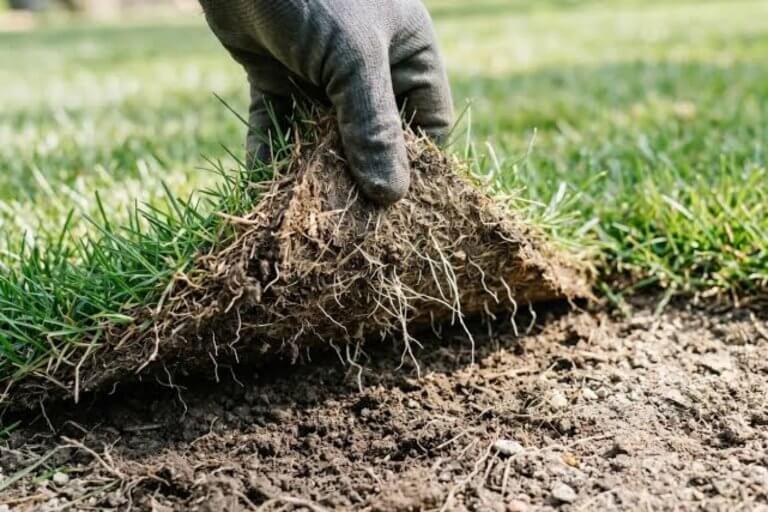
In Palm Bay’s warm conditions, St. Augustine sod typically roots within 3 to 6 weeks during summer installs. Zoysia takes longer, often 3 to 6 months for full establishment. You can test rooting progress by gently tugging a corner of the sod. When it resists lifting, roots have anchored into the soil below. Consistent irrigation during this window is the single biggest factor controlling how fast establishment happens.
Among the sod types Palm Bay yards commonly use, is St. Augustine or Zoysia better?
St. Augustine establishes faster and gives you a lush result sooner, but it’s more vulnerable to chinch bug damage in Brevard County and shows drought stress quickly. Zoysia handles drought by going dormant rather than dying, holds up better to salt air exposure near the Indian River, and is more durable under foot traffic once established. If you have a reliable irrigation system and want quick results, St. Augustine wins. If long term durability and drought resilience matter more, Zoysia is the stronger choice for Palm Bay conditions.
Can I install sod year round in Brevard County?
Yes. Palm Bay’s climate allows sod installation in any month, unlike northern states where winter ground temperatures halt growth. Summer installs benefit from warm soil temperatures that accelerate rooting, but they also require more frequent irrigation because of heat stress. Winter installs are lower risk for heat stress but root more slowly. Late spring through early summer is the most favorable window overall. Whatever the season, irrigation management during establishment is critical.
How much sod do I need for my Palm Bay yard?
Sod is typically sold by the pallet, which covers 400 to 500 square feet depending on the supplier. Measure your lawn area in square feet, subtract any beds, driveways, or structures, and divide by the pallet coverage. Add 5 to 10 percent for cuts and waste around borders. For an accurate measurement on irregular lot shapes, which are common in Palm Bay, a professional site visit before ordering eliminates the guesswork and prevents costly over or under ordering.